
About Helen Arkell

This author has not yet filled in any details.
So far Helen Arkell has created 160 blog entries.

Get 50% Off Our HELP! Dyslexia Course for Parents This March!

Are you looking for practical ways to support your child with dyslexia? This March, we’re offering an exclusive 50% discount on our insightful, on-demand HELP! Dyslexia Course for Parents – a fantastic opportunity to gain valuable knowledge and strategies at half the price!

What is the course about?

Hints, Encouragement, and Liaison for Parents (HELP!) is a unique dyslexia course designed specifically for parents of children with learning difficulties. Whether your child has recently received a dyslexia diagnosis or you simply want to better support them at home, this course provides the essential tools to help them learn to learn.

The course is completely online and available on demand, meaning you can watch and learn at your own pace, from the comfort of your home.

What will I learn?

Understanding how dyslexia impacts learning at school and at home is crucial in providing the right support. This course covers a broad range of topics, helping you develop a deeper understanding of dyslexia, its challenges, and how to turn them into strengths.

The course provides expert guidance on the following key areas:

  • Session 1: Introduction to Dyslexia and Specific Learning Difficulties (SpLDs)
  • Session 2: Working Effectively with Your Child’s School, Talking to Your Child About Dyslexia & Building Self-Esteem
  • Session 3: Understanding How Your Child Learns Best, Study Skills & Homework Support
  • Session 4: Supporting Your Child’s Reading
  • Session 5: Supporting Your Child’s Spelling
  • Session 6: Supporting Your Child’s Writing
  • Session 7: Supporting Your Child’s Maths

Don’t miss out on this limited-time offer. Sign up now and get 50% off our HELP! Dyslexia Course for Parents this March.

Let’s work together to empower children with dyslexia and help them reach their full potential!

By |2025-05-01T09:56:58+01:00March 17th, 2025|Course news|Comments Off on Get 50% Off Our HELP! Dyslexia Course for Parents This March!

Level 5 and Level 7 Diplomas in Teaching Learners with Dyslexia/SpLDs and Teaching and Assessing Learners with Dyslexia/SpLDS

Join our Level 5 and Level 7 courses!

At Helen Arkell we have been successfully delivering the Level 5 and Level 7 Diploma courses for many years. Our next courses begin September 2025 and are running from the Centre in Farnham.

These are a nationally recognised qualifications and we have consistently been recognised by CPD External Verifiers as being one of the ‘gold standard’ centres for delivering these qualifications.

Our Level 5 and Level 7 courses are accredited by the CPD Standards Office and our Level 5 course is approved by Patoss (Professional Association for Teachers of Students with Specific Learning Difficulties).

We are unique in providing a very high proportion of tutor-to-candidate contact time to ensure that each candidate achieves to the very maximum of their ability.

The tutor group system at Helen Arkell encourages candidates to share their wealth of knowledge and experiences during their weekly contact with each other.

Please note that you do not need a university degree or to be a qualified teacher to attend our Level 5 course. Those looking to do Level 7 need to hold a Level 5 qualification.

Find out more:

Level 5 Diploma in Teaching Learners with Dyslexia/Specific Learning Difficulties – with teaching practice in KS2-KS1

Level 5 Diploma In Teaching Learners with Dyslexia/Specific Learning Difficulties – with teaching practice in KS2-KS3

Level 7 Diploma in Teaching and Assessing Learners with Dyslexia/ Specific Learning Difficulties

By |2025-03-17T11:48:58+00:00March 17th, 2025|Course news|Comments Off on Level 5 and Level 7 Diplomas in Teaching Learners with Dyslexia/SpLDs and Teaching and Assessing Learners with Dyslexia/SpLDS

Theo Paphitis Dyslexia Bursary provides free training for schools

Thanks to the Theo Paphitis Dyslexia Bursary, launched in November 2023, an incredible 176 teachers and teaching assistants from UK state schools have already received free specialist training, enabling them to better support learners with dyslexia back in their classrooms.

The continuing generosity of Theo and Ryman Retail Limited means that we are able to offer even more teachers and teaching assistants from the state school sector free places on the Helen Arkell Dyslexia Charity’s six-week online Supporting Learners with Dyslexia course!

This practical course comprises six sessions on Fridays from 9.30 am, starting on 25 April 2025 and provides lots of useful, tried and tested strategies for supporting learners effectively. Recordings of each session are sent out after the live session for anyone who is unable to attend.

To apply for a bursary-funded place on this course, simply complete a short application form here.

Here’s what one of our past attendees had to say about the course:

‘I would like to say what an amazing course this has been!! I am a literacy practitioner at a secondary school, and the course was everything I was looking for and more! It has given me so much confidence delivering my literacy sessions, and I have gained so many tips and ideas. The presenters’ wealth of knowledge and information has been amazing, and I’ve thoroughly enjoyed every week.’

Please note, if you have already received a free place for this course, you will not be eligible for another free place. If your team found this course helpful you can book a paid-for place.

Helen Arkell’s aim is to remove barriers to learning, employment and life for more and more people with dyslexia, regardless of ability to pay, and we are indebted to Theo Paphitis and Ryman for helping us to achieve this.


By |2025-03-25T13:48:58+00:00March 14th, 2025|Course news, Fundraising news|Comments Off on Theo Paphitis Dyslexia Bursary provides free training for schools

The new Delphi Definition of Dyslexia has been agreed

The new Delphi Definition of Dyslexia has been agreed, you can read more about this here.

The research was conducted by the University of Birmingham, the SpLD Assessment Standards Committee (SASC), Kings College London, and the University of Oxford. It is published today (25th Feb) in the Journal of Child Psychology and Psychiatry.

Julia Carroll, Professor of Psychology in Education at the University of Birmingham who led the study, said: “There has not been a new attempt to define dyslexia since the Rose Review in 2009. The review provided a definition and argued for specialist teachers to help identify and support dyslexia. Despite the Rose definition significantly influencing practice, it has gathered criticism over the last 15 years and has not been universally accepted.”

“In addition to this, there is no clear universal pathway for the assessment of children with dyslexia in England, Wales and Northern Island, and the process for identifying learning needs and interventions can vary massively from place to place. Adopting a universal definition for dyslexia is the first step to improving support for children experiencing the challenges of dyslexia.”

The researchers brought together 58 international experts in dyslexia, including academics, specialist teachers, educational psychologists, and individuals with dyslexia, to vote on whether they agreed with several key statements about dyslexia. The statements covered six key sections: the definition of dyslexia, intellectual abilities and dyslexia, the etiology of dyslexia, co-occurrence with other disorders, the changing impact of dyslexia over a lifespan, and common misconceptions.
42 statements received a consensus of more than 80% and were accepted by the group. They were then used to create the new definition of dyslexia:

  • Dyslexia is a set of processing difficulties that affect the acquisition of reading and spelling.
  • In dyslexia, some or all aspects of literacy attainment are weak in relation to age, standard teaching and instruction, and level of other attainments.
  • Across languages and age groups, difficulties in reading fluency and spelling are a key marker of dyslexia.
  • Dyslexic difficulties exist on a continuum and can be experienced to various degrees of severity.
  • The nature and developmental trajectory of dyslexia depends on multiple genetic and environmental influences.
  • Dyslexia can affect the acquisition of other skills, such as mathematics, reading comprehension or learning another language.
  • The most commonly observed cognitive impairment in dyslexia is a difficulty in phonological processing (i.e. in phonological awareness, phonological processing speed or phonological memory). However, phonological difficulties do not fully explain the variability that is observed.
  • Working memory, processing speed and orthographic skills can contribute to the impact of dyslexia.
  • Dyslexia frequently co-occurs with one or more other developmental difficulties, including developmental language disorder, dyscalculia, ADHD, and developmental coordination disorder.

Julia Carroll, Professor of Psychology in Education at the University of Birmingham who led the study, said: “A definition of a learning disorder such as dyslexia, should allow researchers and practitioners to consistently establish what should, or should not be considered ‘dyslexia’, what the boundaries to diagnosis should include and what elements are important in assessment. Our new definition retains the idea of difficulties with reading and spelling relative to age, ability, or educational expectations. However, it is less focused on English speakers and children. In line with evidence, we highlight that phonological processing has a causal link to dyslexia, but that other factors also play an important role in explaining variability in presentation. We also note the high rates of co-occurrence between dyslexia and other developmental difficulties.”

In a second study from the same group, published in the Dyslexia Journal, the researchers examined ways to improve dyslexia assessments which start with the new definition. The process agreed upon by the expert panel fell into four main steps once a child has presented with difficulties in reading, spelling or writing fluency that affect daily functioning:

Stage 1: Consider, rule out and respond to other factors that might be the primary reason for reading, spelling or writing difficulties.
Stage 2: Gather further information and, where necessary, intervene with additional support fast and early. Be aware of warning signs and likely indicators that suggest the possibility of persistent difficulties.
Stage 3: Observe, record and evaluate response to intervention.
Stage 4: Where response to intervention is stalling or failing, refer for a comprehensive assessment by a specialist teacher assessor or psychologist with appropriate training.

The study argues that, along with the standard definition, there should be a national statutory pathway to dyslexia assessment following this process.

Professor Carroll concluded: “Dyslexia is a complex learning disorder that can look different from person to person. It can have lasting impacts on education and then on working life if not identified and addressed properly. By not having a universal process to identify and support people with dyslexia, we are letting down so many of our children and young people. If the government is serious about improving SEND provision in schools, then updating and standardising the definition and assessment for dyslexia should be a priority.”

Please read more about this here.

By |2025-06-19T12:01:02+01:00February 26th, 2025|Research news|Comments Off on The new Delphi Definition of Dyslexia has been agreed

How Aware Are You Of The Positive Attributes Associated With Dyslexia?

How Aware Are You Of The Positive Attributes Associated With Dyslexia?

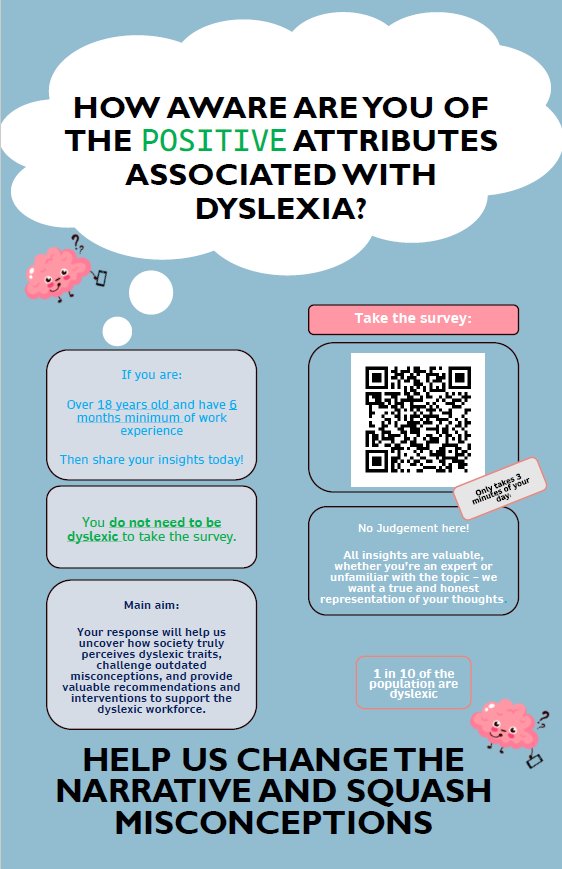
Natalie, a final year Economics student at the University of Leeds, is currently completing research for their final year dissertation and needs your help to tackle the misconceptions associated with dyslexia in the workplace. If you’re interested, please take a few minutes to complete the survey today!

Why is this important?

The survey aims to assess the level of understanding that both dyslexic and non-dyslexic employees have regarding the skills strongly associated with dyslexic thinking. The results will highlight the workforce’s current perceptions of dyslexic cognition, which will aid us in suggesting effective interventions and guiding further research. By truly understanding the accurate skills associated with different cognitive variations, we can help employees thrive in the workplace and enhance the efficiency of our labour force.

Make a difference – your voice matters:

There is no judgment! Please answer honestly so we can gauge an accurate level of understanding. Every response counts and helps us move closer to a more inclusive and supportive work environment for everyone.

The survey only takes 3 minutes, and your insights could lead to meaningful change.

Fill in the survey here.

Your participation is greatly appreciated!

HOW AWARE ARE YOU OF THE POSITIVEATTRIBUTES ASSOCIATED WITH DYSLEXIA?

By |2025-02-24T13:11:21+00:00February 24th, 2025|Research news|Comments Off on How Aware Are You Of The Positive Attributes Associated With Dyslexia?

Farnham Literary Festival – Reading High-Frequency Words Accurately and Fluently Talk

Reading High-Frequency Words Accurately and Fluently

March 9  at 10:30am – 12:00

Join us at the Farnham Literary Festival on March 9 to learn how to enhance high-frequency word reading!

Marlene Caplan will lead the session and is an Educational Psychologist and Specialist Teacher with extensive experience in teaching and assessment. Marlene is a Tutor on the Level 7 Diploma Course and has worked as a SENCo and Specialist Teacher at Yale University and the Institute of Education. She co-authored Anyone Can Spell It and Just in Time(s) and also created the reading game Phrase It®.

Research shows that the first 1,000 high-frequency words account for 90% of reading material. Recognising these words is key to improving accuracy and fluency for any child learning to read. This talk covers what these words are, where we see them, and why we need to learn them. It also explores ways to improve high-frequency word recognition both in terms of accuracy and fluency. The session will highlight resources and strategies suitable for parents and teaching staff, including Phrase It®, a new game designed to boost high-frequency word reading skills.

Tickets are on sale here.

By |2025-03-14T17:20:08+00:00February 20th, 2025|Course news|Comments Off on Farnham Literary Festival – Reading High-Frequency Words Accurately and Fluently Talk

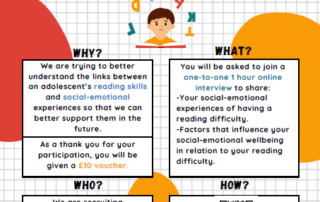
The Social-Emotional Experiences of Adolescents With Reading Difficulties

The University of Surrey is trying to understand better the links between an adolescent’s reading skills and social-emotional experiences so that we can better support them in the future. As a thank you for your participation, you will be given a £10 or £20 voucher.

They are recruiting:

Adolescents who:

  • Have reading difficulties.
  • Are ages 11 to 16.
  • Are attending secondary school.
  • Are native English speakers or are fluent in English if it is an additional language.

Professionals working with secondary school adolescents (aged 11 10 17) with reading difficulties. This includes mainstream secondary school teachers, educational psychologists, specialist teachers, SENCos ,and dyslexia tutors.

and parents who:

  • Have a secondary school adolescent child aged 11-17 who has reading difficulties.
  • Are native English speakers or are fluent in English if it is an additional language.

Participants will be asked to join a one-to-one 1 hour online interview to share:

  • Your social-emotional experiences of having a reading difficulty.
  • Factors that influence your social-emotional well-being in relation to your reading difficulty.
  • Adolescents social-emotional experiences of having reading difficulties.
  • Factors that influence.social-emotional well-being for adolescents with reading difficulties.

Participants should scan the QR code for more information and to sign-up. Contact Jovana Durica unrap@surrey.ac.uk for more information.


By |2025-02-24T13:17:35+00:00January 30th, 2025|Research news|Comments Off on The Social-Emotional Experiences of Adolescents With Reading Difficulties

Research Opportunity for Parents of Children with Dyslexia

What is the emotional experience for parents of receiving a Dyslexia diagnosis for their child?

We would like to invite you to take part in a research study, which aims to understand more about the emotional impact for parents of going through, and receiving, their child’s Dyslexia diagnosis. The research findings will help inform counsellors and psychotherapists about the experience, to help them provide support to parents in the future.

Please find below further information about the project, which is being carried out at the University of Roehampton. 

If you think you could help explore this important topic, please get in touch with the researcher, Andrea Luff at Luffa@roehampton.ac.uk or 07867 780131.


What are you trying to find out?

This piece of research aims to understand more about the emotional impact for parents going through, and receiving, a Dyslexia diagnosis for their child.


Why are you doing it?

This topic is of personal interest to Andrea, as a parent of a child with Dyslexia herself. Having personally gone through working towards getting an assessment and receiving a diagnosis for her son, she would like to understand more about the emotional impact that this has had on others. Her hope is that this research will inform counsellors and psychotherapists about parents’ experiences and that this deeper understanding will help them to better provide support to clients in a similar situation in the future.

This research project forms part of a Masters programme in Integrative Psychotherapy and Counselling, at the University of Roehampton.

Why do you need me?

We would like to gain an in-depth understanding of individual, personal perspectives and emotional responses of parents who have gone through the process of reaching a Dyslexia diagnosis for their child. To do this thoroughly, we would like to speak to people with this experience, who are willing to share their thoughts and feelings about it.

Who can take part?

We would like to speak to parents who, within the last six months, have received a Dyslexia diagnosis for a child who is 16 or under and based in the UK.

What would I need to do if I chose to take part?

You would be invited to an interview with me between January and February 2025. These interviews will last for approximately 45-55 minutes and will take place either in your own home, at the Helen Arkell Centre in Farnham, at the University of Roehampton, or online.

What will happen during the interview?

We will be asking you a series of questions, covering different aspects of your experience. This will include how the Dyslexia assessment came about, what you knew about Dyslexia before this process and how you felt about your child’s diagnosis when you received it.

We will be audio-recording the interviews, so that I can fully and accurately capture what is said.

Will the interviews be confidential?

Everything you say will be treated confidentiality. However, there is a limit to this: if you disclose a risk of serious harm then we may need to take appropriate action, which adheres to the BACP Code of Ethics for Conducting Research (2018).

After the interview, we will transcribe it in full and will remove any identifying details about you.  While extracts from the interviews may appear in my report and in any publications arising from it, all personal information will be completely anonymised.

The final research piece will be submitted to the School of Psychology at the University of Roehampton in June 2025. The dissertation would be available to you, should you wish to receive a copy on completion.

Can I change my mind?

There is absolutely no obligation for you to participate in this study. If you do decide to take part, but then change your mind, you can withdraw from the study without needing to provide a reason. If you withdraw from the study before 1st March 2025, then your data can be removed. After this point, data will be anonymised and will no longer be identifiable, therefore the data may not be erased but will only be used in an anonymised form as part of an aggregated dataset.

Will I get paid to take part?

No, no gratuity will be offered to participants by way of an incentive. Unfortunately, a reimbursement of expenses or compensation cannot be provided.

What do I do if I wish to get involved?

Please contact, Andrea Tara Luff: Luffa@roehampton.ac.uk or 07867 780131.

Who can I speak to for more information?

If you have any questions about participating in the study, or would like to discuss the project further, please get in touch with Andrea, using the contact details above.

If you have any concerns, please contact the research supervisor at the University of Roehampton: Kay.capaldi@roehampton.ac.uk

If you would like to contact an independent party, please contact the Dean of Psychology at the University of Roehampton: Yannis.fronimos@roehampton.ac.uk


By |2025-06-19T12:04:43+01:00January 28th, 2025|Research news|Comments Off on Research Opportunity for Parents of Children with Dyslexia

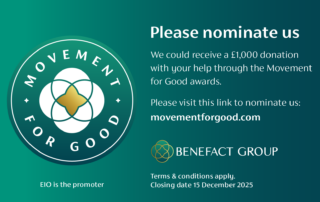
Help Helen Arkell Dyslexia Charity Make a Difference

By nominating us for a Movement for Good Award from the Benefact Group, you could help Helen Arkell win £1,000 to further our mission. This donation could help us provide essential support, resources, and tools to empower individuals with dyslexia to reach their full potential.

How You Can Help

Help Helen Arkell Dyslexia Charity Make a Difference and nominate us today! It’s quick, simple, and can make a world of difference. Just follow this link to nominate Helen Arkell Dyslexia Charity.

Each nomination brings us closer to winning. Winners are drawn at random, so the more nominations we receive, the better our chances of being selected.

Why Your Support Matters

At Helen Arkell Dyslexia Charity, we believe that every individual with dyslexia deserves the support they need to succeed. Together, we can continue to make a lasting impact in the lives of individuals and families across the UK.

Thank You for Your Support

Your nomination means the world to us and to those we support.

Help Helen Arkell Dyslexia Charity Make a Difference

By |2025-03-25T13:50:32+00:00January 9th, 2025|Fundraising news|Comments Off on Help Helen Arkell Dyslexia Charity Make a Difference

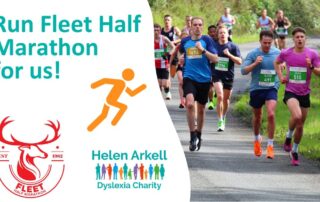
Support Helen Arkell Dyslexia Charity at Fleet Half Marathon 2025

Take Part in the Fleet Half Marathon and Support Helen Arkell Dyslexia Charity!

Are you ready to lace up your running shoes and take on a challenge? The Fleet Half Marathon is just around the corner! This fantastic event is the perfect springboard for the London Marathon or other spring races. With its fairly flat course and cheering crowds along the route, it promises a memorable experience for every runner.

📅 When? March 16th, 2024
📍 Where? Fleet, Hampshire

Why Run with Team Helen Arkell?

By taking part in the Fleet Half Marathon, you’ll be running for more than just the finish line – you’ll be helping us support children, young people, and adults with dyslexia. Every step you take will help change lives! Here’s how you can get involved:

Secure your charity spot today!

  • A £20 non-refundable deposit secures your place.
  • Commit to raising a minimum sponsorship of £100 to make a real difference.
  • Register now!

As part of Team Helen Arkell, you’ll receive:

  • A personalised Helen Arkell technical top to wear with pride.
  • Expert support and advice to help you prepare.
  • A team cheering you on every step of the way!

Don’t miss out register for a charity place now and start your journey with Team Helen Arkell.

Have Your Own Place?

If you’ve already secured your own place in the race, we’d still love to have you on Team Helen Arkell! There’s no minimum sponsorship requirement – just raise as much as you can, and we’ll support you along the way. Every penny counts!

Important Details

  • All participants must be 17 years or older on race day.
  • For more information about the race itself, visit the Fleet Half Marathon website.

Join Us Today!

Whether you’re chasing a personal best, running for a personal reason, or simply want to be part of an incredible community event, the Fleet Half Marathon is the place to be this March. Let’s make a difference together – join Team Helen Arkell and help us create brighter futures for people with dyslexia.

Register for your charity place now: https://helenarkell.org.uk/events/fleet-half-marathon-2025/

If you have any questions, please don’t hesitate to reach out to us at enquiries@helenarkell.org.uk or by calling 01252 792 400

Thank you for your support!

By |2025-03-20T14:51:13+00:00January 6th, 2025|Fundraising news, Uncategorized|Comments Off on Support Helen Arkell Dyslexia Charity at Fleet Half Marathon 2025
Go to Top